
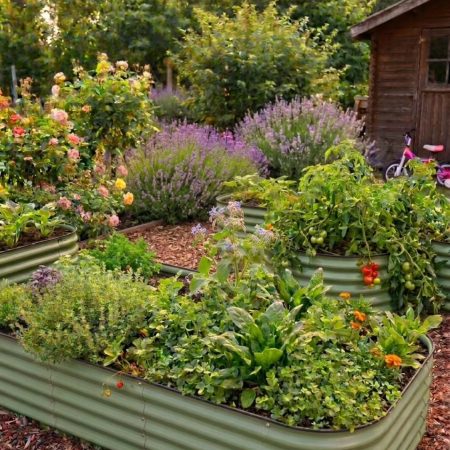
Raised garden bed helps you grow vegetables even when your garden soil is clay, stony or stays wet for a long time in spring. A raised bed is a growing area built above ground level; a raised garden bed is the version enclosed by sides.
Here you will learn how to choose a site, fill a raised garden bed with soil and compare it with an ordinary bed.
Raised bed or ordinary bed?
A raised bed lets you choose your own growing soil. This helps on heavy clay, stony ground and in places where rainwater collects. On a plot with good garden soil, an ordinary bed may be just as suitable and needs less material to build.
Spring warming and watering
Raised soil may warm up faster in spring, but the sowing time depends on the weather, the site and the plant. In a dry summer, a raised garden bed often dries out faster than an in-ground bed. Check the soil moisture and water as needed. The RHS guide to raised beds describes choosing soil and watering needs.
Soil quality and growing site
If your garden’s natural soil is poor, you can fill a raised bed with a soil mix that suits your plants. A raised garden bed keeps the growing area clearly defined. Choose a spot where vegetables get enough light and leave room to move between the boxes. In an open-bottomed box, roots can also reach the soil below when needed.
Excess moisture and drainage
In a wet garden, a raised growing area helps lift roots above excess moisture. Drainage still depends on the bottom of the box and the ground beneath it. Loosen the base before filling and avoid lining the bottom with waterproof plastic sheeting.
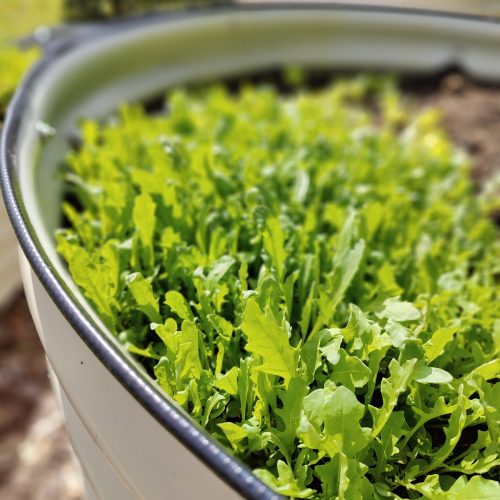
Raised garden bed: weeds and pests
Starting with clean growing soil usually means fewer weeds in a raised garden bed at first. Seeds can still arrive with the wind, compost or birds, so check the bed regularly. If there are rodents in your garden, fit fine-mesh metal netting under the open bottom. Netting will not stop slugs and snails; control them separately if necessary.
Easier maintenance
A higher edge reduces bending and makes sowing, weeding and harvesting more comfortable. The right height depends on the user and whether the bed is tended standing or sitting. A taller box needs more filling material and often dries out faster.
Raised garden bed: how do you fill it?
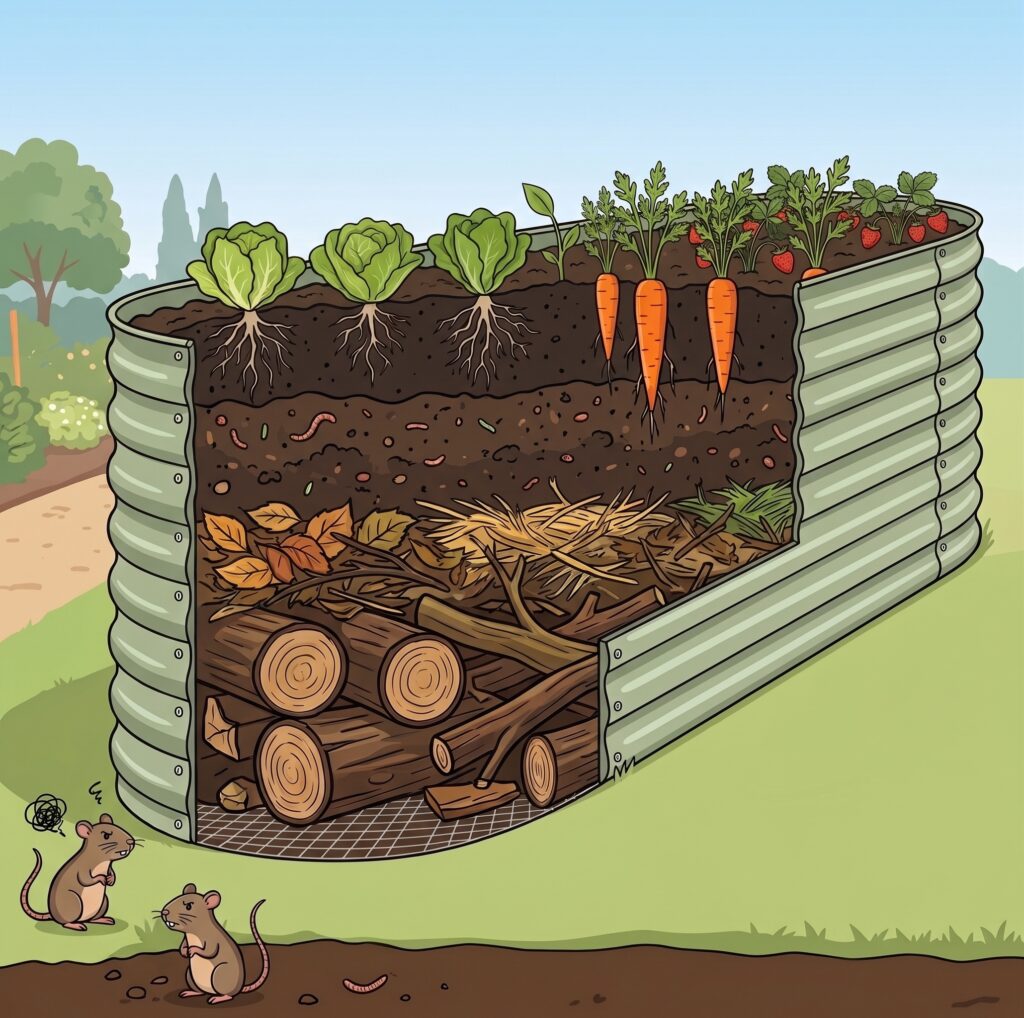
How you fill a raised garden bed depends on its depth. Fill a shallow box mainly with good-quality garden soil and mature compost. In the lower part of a very deep box, you can add suitable organic material to save soil, but the planting layer must stay deep enough for the roots. Branches and leaves settle as they decompose.
1. Prepare the base
Place the box on a level surface, remove perennial weeds and loosen the soil under the box if necessary. In gardens with rodent problems, fix metal mesh to the bottom. Leave the bottom open for water and roots; do not put dense plastic sheeting there.
2. Fill the lower part of a deep box
If the box is deeper than about 50 cm, you can add clean untreated wood, leaves or other suitable organic material at the bottom. Do not use painted wood, diseased plant material or weeds that have set seed. In a shallow garden bed, leave out the branch layer, as it would take growing space from the roots.
3. Add compost and garden soil
Fill most of the box with crumbly garden soil and mix in mature compost. Use only fully rotted manure. Too much compost can make the soil hard to rewet once it dries out, so do not fill the box with compost alone.
4. Add the top growing layer
Leave at least 20–30 cm of good, airy growing soil for vegetables, and plan more room for deep-rooted plants. Fill the box to about 5 cm below the rim, water the soil thoroughly and let it settle a little before sowing. Top up with soil or compost later as needed.
Care tip: a raised garden bed can dry out faster in summer. Check the soil moisture with your finger and mulch the surface if it tends to dry out quickly. See photos of our garden beds, showing set-ups of different sizes and layouts.
Raised garden bed: which one to choose?
When choosing a material, consider maintenance, appearance, budget and the dimensions of the box. A wooden box suits a natural-looking garden, but its durability depends on the type of wood, the finish and contact with damp soil. A metal box does not rot and is easy to clean. Either way, the structure must be stable and suitable for plants.
GroVegz metal raised garden beds has an open bottom and comes in several sizes and colours. Before buying, compare the height of the box with the root depth of the plants you want to grow and work out how much soil you need to fill it.
How much soil does a garden bed hold?
Multiply the box’s internal length, internal width and fill height in metres. For example, a 2 × 1 × 0.3 m growing layer needs about 0.6 m³ of soil. If a deep box has a bottom filling, calculate the soil volume separately and add a little extra for later settling.
Summary: who is a raised bed for?
A raised bed is a good choice if you want to improve growing conditions on poor ground or garden at a more comfortable height. A raised garden bed helps define the growing area and control the soil composition. In a garden with good natural soil, however, an in-ground bed may be perfectly adequate.
Before building, choose a sunny spot, measure the growing area you need and plan how you will water it. Fill the box mainly with good-quality soil, especially within the plants’ root zone. If you need a suitable box, take a look at the GroVegz range of garden beds.